You have 0 items in your cart

 info@wsystem.com +33 2 40 78 22 44
- For USA only (800) 875-5907
info@wsystem.com +33 2 40 78 22 44
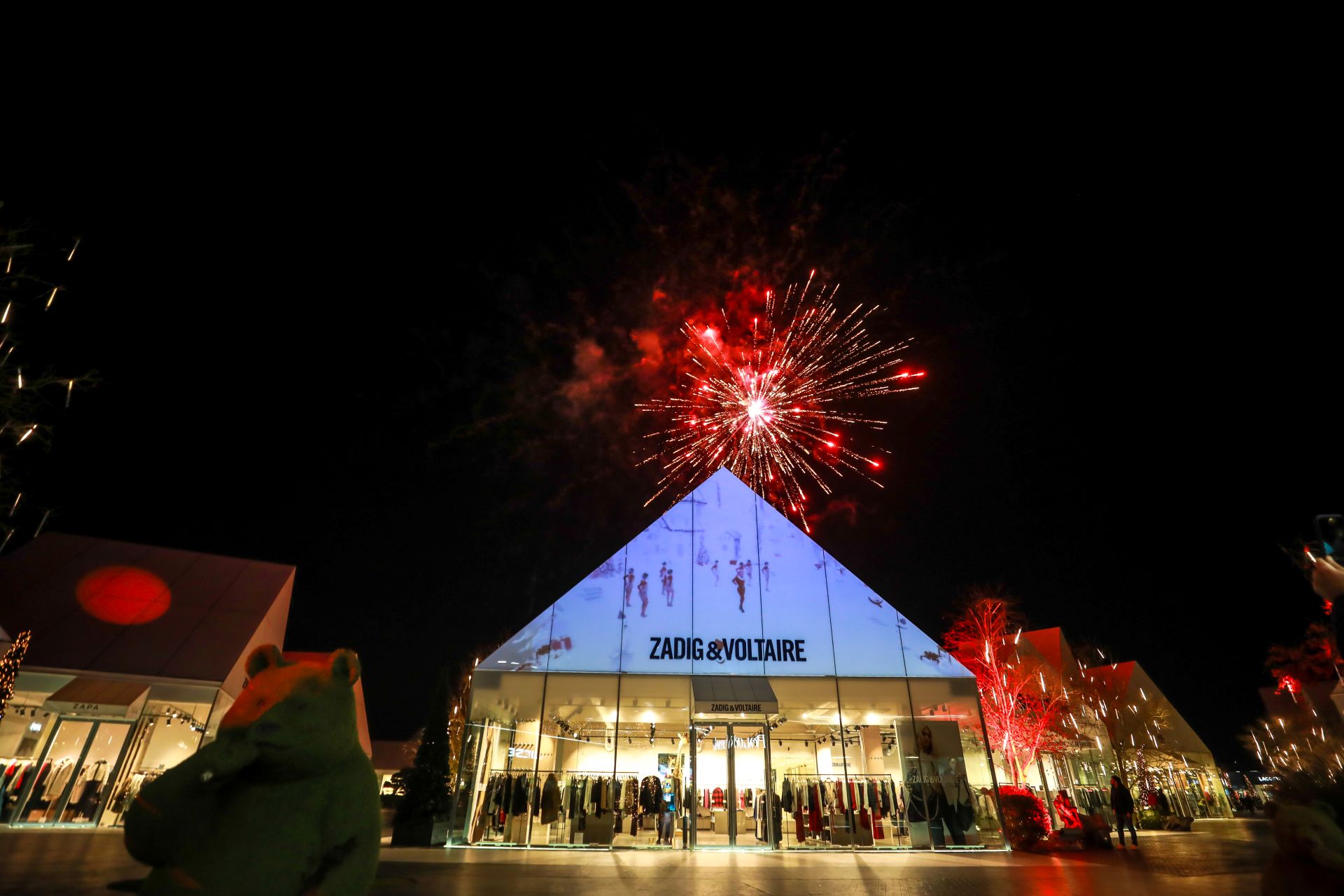
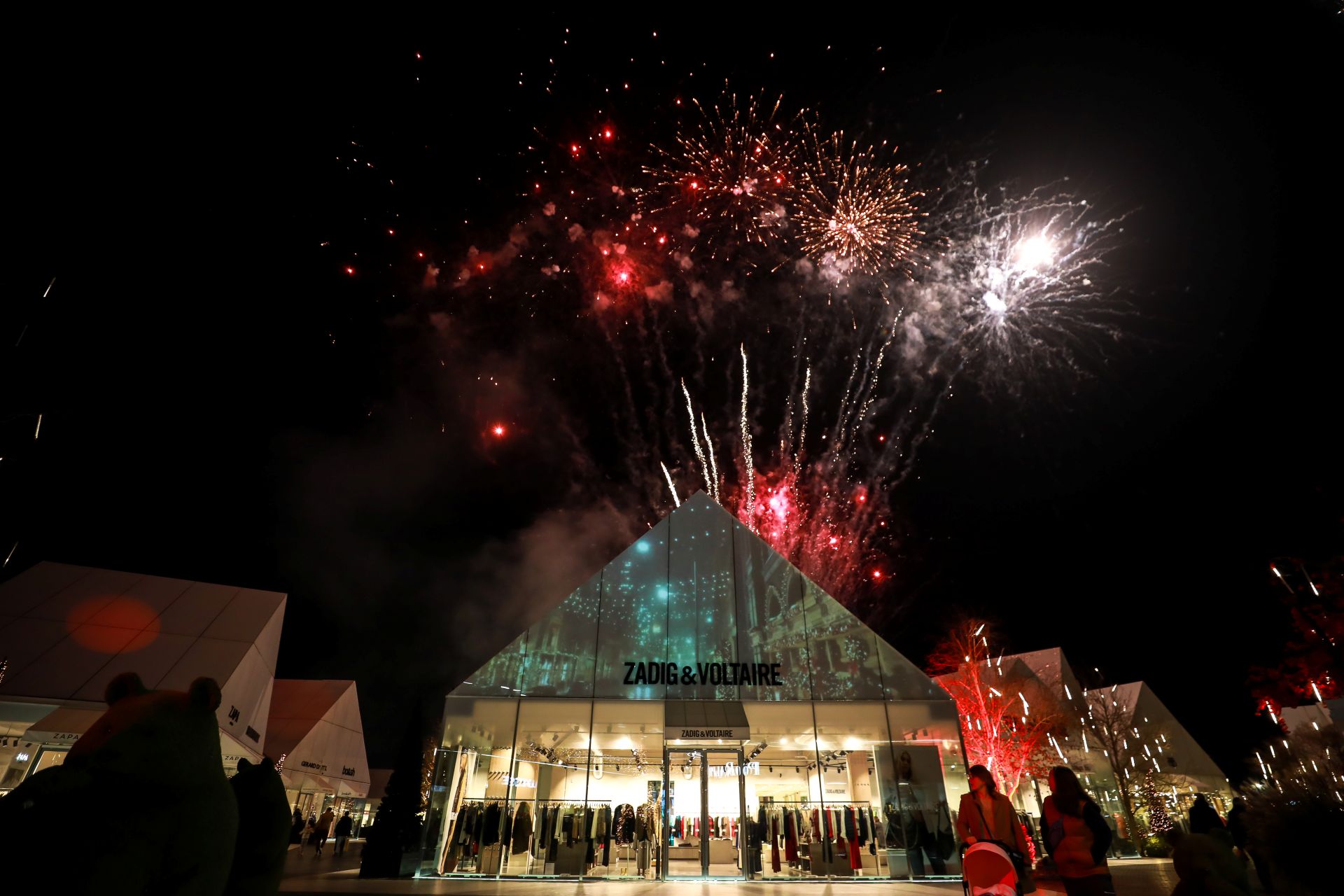
- For USA only (800) 875-5907La Compagnie de Phalsbourg, owner of The Village in Villefontaine near Lyon, took on a technical challenge: deploying a video projection, audio, and DMX installation across several distant sites, without relying on an external integration provider.
The stakes? Combining autonomy, stability, and ease of use, all while controlling costs and ensuring perfect synchronization between the equipment.
Julien Raabe, Deputy in charge of event infrastructure and sustainable development excellence, took the time to answer our questions.
Julien Raabe: We needed to create a video projection installation in several locations of an outlet village located in Villefontaine, near Lyon. The goal was to be able to do this almost autonomously, without calling upon a global integration provider as we usually do for other projects.
The challenge? We needed video players, DMX, and audio in locations far from each other. Several solutions were available to us: use the proprietary software of our usual provider for fountain shows and fireworks, but that would have been expensive. Or opt for QLab, but on distant devices, synchronization would have been complicated.
That’s when I turned to Waves System. The solution allowed me to have video miles away as long as we had an optical fiber, amplified or non-amplified sound, DMX information, and even dry contact triggers for potential interaction with the public.
I also needed stability far superior to that of a Windows PC, and more accessible than a Linux PC. I am a strong advocate for Mac, but in this specific case, I didn’t have a ready-made solution. So I needed an all-in-one system offering stability, accessibility, and remote control over the network.
It was primarily a question of cost and ease of use. The relative simplicity of the system allows us to work autonomously without being IT, network, or programming professionals. The user environment is not perfect, but it remains simple enough to be mastered with average skills. By “average skills,” I mean not needing to be a network engineer or a lighting programmer. Once an initial implementation has been done, the use becomes accessible and stable.
Several factors tipped the scale:
The ease of adoption with average skills and the correct cost. It’s not particularly cheap, but considering what it enables, it’s justified.
“Made in France” is not a priority for me, but the fact that my contact is French and available, that is important! Waves System is not a huge multinational, which allows me to forge a privileged link with you and potentially influence the product roadmap based on my needs.
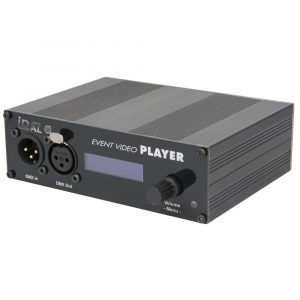
The compactness is remarkable: it allows me to integrate the system into video projector housings that are already quite full.
Finally, the product is relatively complete and consistent. We have input/output contacts, RS-232, HDMI, USB, an amplified or non-amplified output… It’s very comprehensive. I can use the dry contacts without adding modules, unlike other solutions where you are always obliged to add components.
There was the EVP, but also the entire project: sourcing video projectors, enclosures, physical installation, creation of the high-voltage/low-voltage network… A huge amount of things!
The EVP was one element among others: audio, video, DMX player. It went well from the moment we understood and mastered the file and tag system. It is both stable and not always very intuitive for the moment. There may be improvements planned on the intuitive aspect of file management, but once you understand how it works, it is stable, compact, and complete.
Yes, I use a lot of solutions from Nicolaudie for DMX, or proprietary solutions from my provider, but not yet an all-in-one solution like this one.
The synchronization between the players is nearly perfect. Access via a Web page on my VLAN is very easy and stable. I didn’t have to worry about possible bugs.
There was a certain amount of time for learning the ropes, but no debugging to do! From the moment you master how the equipment operates, it works. Unlike other solutions where sometimes it doesn’t work without understanding why.
So, in summary: compactness, stability, network access, and synchronization.
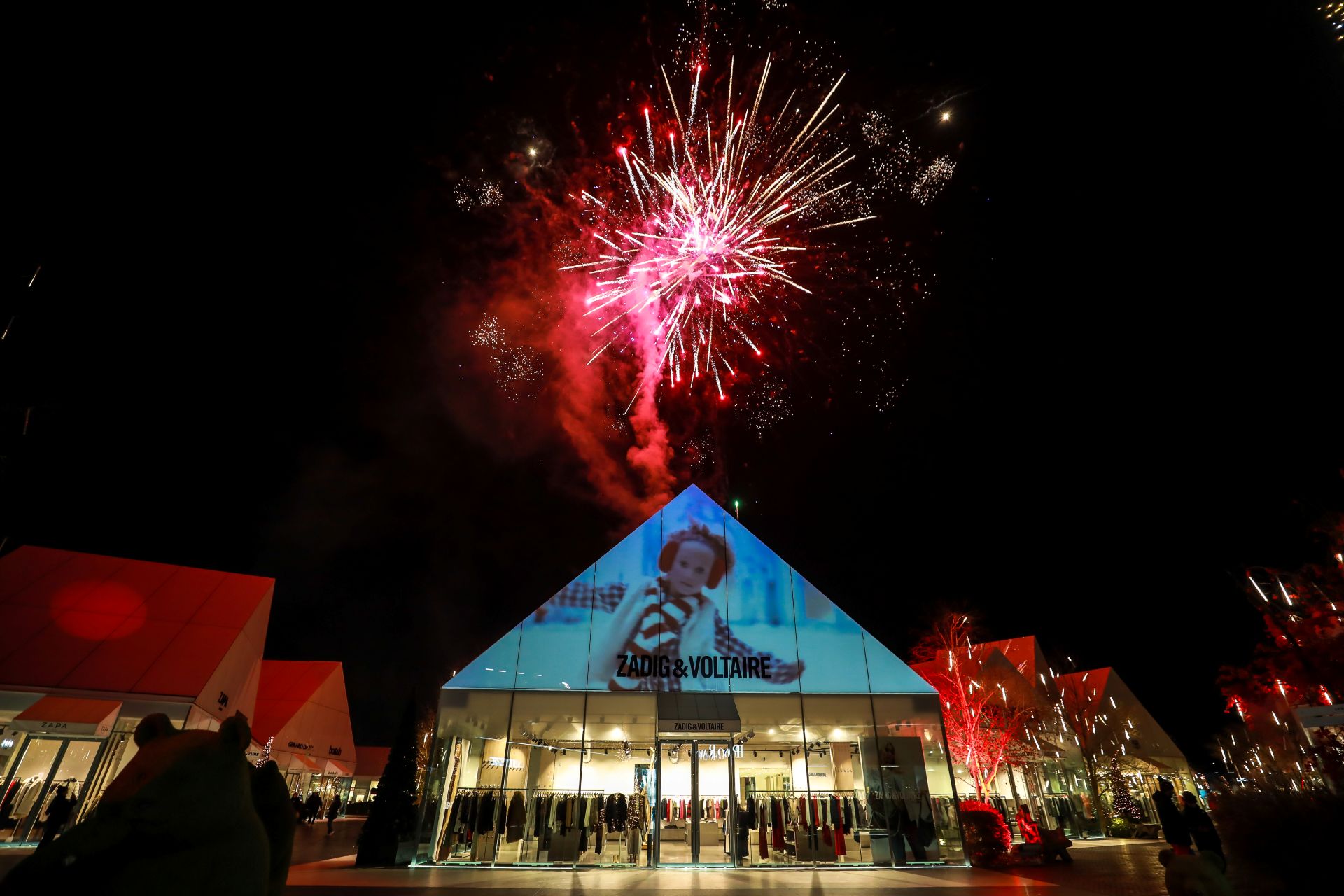
Crédit photos : The Village
We are still in the finalization phase, but the EVP380 operates stably in a fairly complex environment: networks, high voltage, low voltage, video projectors…
I had many things to debug on the entire system which includes elements controlled by Art-Net (which works very well, by the way!), video, sound system… but not on the EVP380 itself.
As for what is expected of the EVP380, it does its job perfectly, with no reboot necessary, no correction needed. If a file doesn’t start, it’s because it’s misnamed or the tag is poorly done – there is no random bug.
The simplicity of the system allowed us to set up and operate the overall installation. Perhaps with a less stable or more complex system, I would still be debugging or programming it.
The Waves System part of my entire installation simply hasn’t been a problem.
I would recommend the system for its stability, ensured by its closed ecosystem. You can’t add many things to it like on QLab, but that’s precisely why QLab is less stable or less simple.
I would recommend it for its compactness and for the completeness of the system: physical DMX, Art-Net, amplified sound, non-amplified sound, dry input/output contacts, 4K playback… You have a bit of everything in a very compact and stable format.
And especially, the network synchronization – that’s a real plus!