You have 0 items in your cart


Tradition
With the boom in cultural exchange and the secularization of society, Christmas celebrations have gradually taken on a secular and family-oriented character and are increasingly detached from religious interpretations. It was alongside this shift in modern society that Christmas lights first appeared in the 1960s, driven by city governments. Take, for example, the town of Les Herbiers (Vendée, France), which began installing decorations as early as 1963.
During the communist era, Christmas—a Christian and religious holiday—was simply banned by the ruling regime. Prohibited in the USSR as part of the state’s anti-religious policy, the Christmas tree was once again permitted by Joseph Stalin starting in 1934, but only on the condition that it be put up to celebrate New Year’s. Orthodox Christmas was once again permitted in 1991. After the fall of the Eastern Bloc, Christmas began to gain popularity once more, leading to some unusual situations.
Originally the exclusive domain of local governments, outdoor Christmas lights are becoming increasingly widespread, to the point that, since the 2000s, private individuals have been rivaling municipal Christmas light displays.
While Christmas lights are normally installed in accordance with decisions made by the technical departments and the city council, they may also be installed based on recommendations from local business owners, who can request that the city install outdoor lighting in a specific area in exchange for a financial arrangement.
In Paris, too, for many years now, certain major retailers have been organizing their own Christmas light displays, which—due to their size and the creative design that goes into them—have just as much impact as the city’s official illuminations. This is the case with the Christmas lights on the Champs-Élysées, which are decked out in all kinds of illuminations every year.
An Environmental Challenge
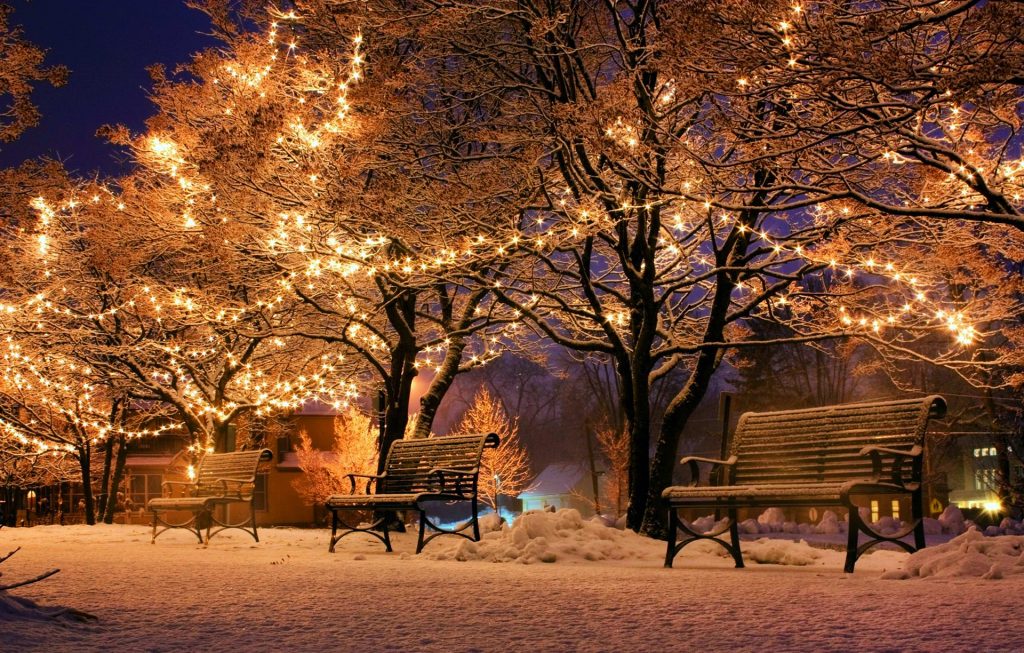
We need to think globally. In the United States, the electricity consumed by Christmas lights alone exceeds the total annual electricity consumption of Ethiopia or El Salvador. This is the alarming conclusion reached by the Center for Global Development in a white paper on international development, based on a study by the U.S. Department of Energy published in 2008.
The energy consumed could power 14 million refrigerators, according to the Center for Global Development. This comes as no surprise when you consider that across the Atlantic, outdoor Christmas lights are practically a religion for some, with households transforming their homes into miniature versions of the Champs-Élysées. In Florida, for example, the Reed family pulls out all the stops every year, using more than 200,000 LEDs and a Ferris wheel in their backyard.
And in mainland France as well, the electricity consumption of these Christmas lights is far from trivial. In 2010, ADEME estimated the power required at 1,300 MW, roughly equivalent to the output of a nuclear power plant (according to 20 Minutes). Since then, the trend has been downward, the agency notes, particularly among local governments. For private individuals, who account for three-quarters of this consumption, behavior also varies. Christmas lighting contests are targeted by environmental organizations such as Greenpeace. But it is difficult to gauge the trend due to the lack of a recent report.
How do you control these lights?
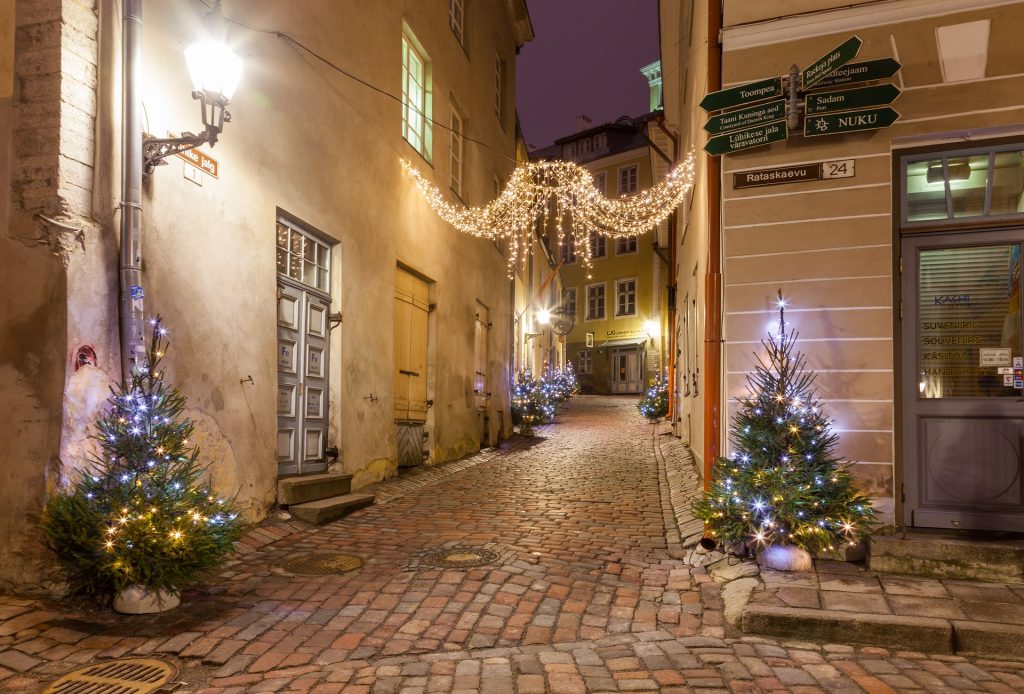
In the same vein as the guides on how to control Christmas lights using Arduino and Raspberry Pi, the guide published on LittleBits offers a solution for animating string lights by sending text messages from your smartphone via the cloud. For example, by typing a color as a keyword—such as “white”—the string lights will glow white. The getting-started guide is designed to be accessible to as many people as possible, provided they have the necessary equipment.
For Individuals
Smart lighting knows no boundaries, whether under your roof or under the stars. Controlling your Christmas tree remotely opens up a world of possibilities. For example, you can activate a Nativity scene lighting setup to illuminate the roof of the manger. You can also highlight the features of a path, a pond, and more.
The lights can turn on and off in sync with sunrise and sunset. You can also set the outdoor lights to flash when the alarm system is triggered. This will draw attention to suspicious activity.
So-called “smart” lighting, through home automation solutions, manages all aspects of your outdoor space for you. Your solution should be easy to use—whether via a remote control, a smartphone, or even a connected light switch.
There are also light show recording solutions available on the market. These are very convenient if you want standalone, easily programmable equipment. Outdoor lighting can also be connected to this type of device. For an even more spectacular experience, speakers can also be installed to complement the light show with background music.
In the municipalities
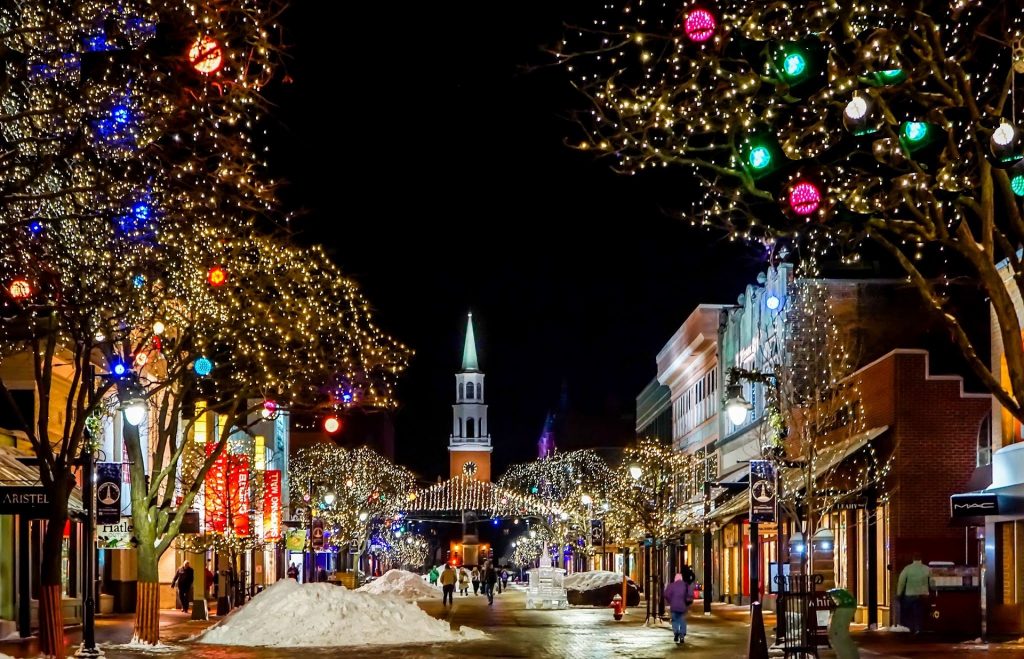
Municipalities are facing increasingly significant dilemmas regarding global warming and the energy crisis. They are forced to limit their energy consumption while still maintaining that unique festive magic during the holiday season. Cities must invest in equipment that uses less electricity to limit unnecessary waste, which would otherwise drive up costs. Medium-sized cities like Poitiers, France, have invested in LED Christmas lights. These lights, which use energy-efficient bulbs, provide significant savings compared to previous years. To control these outdoor lights, cities connect them to the public lighting circuits, but with a special schedule running from December 1 through 31, with an average of six hours of operation per day.
The Role of Integrators
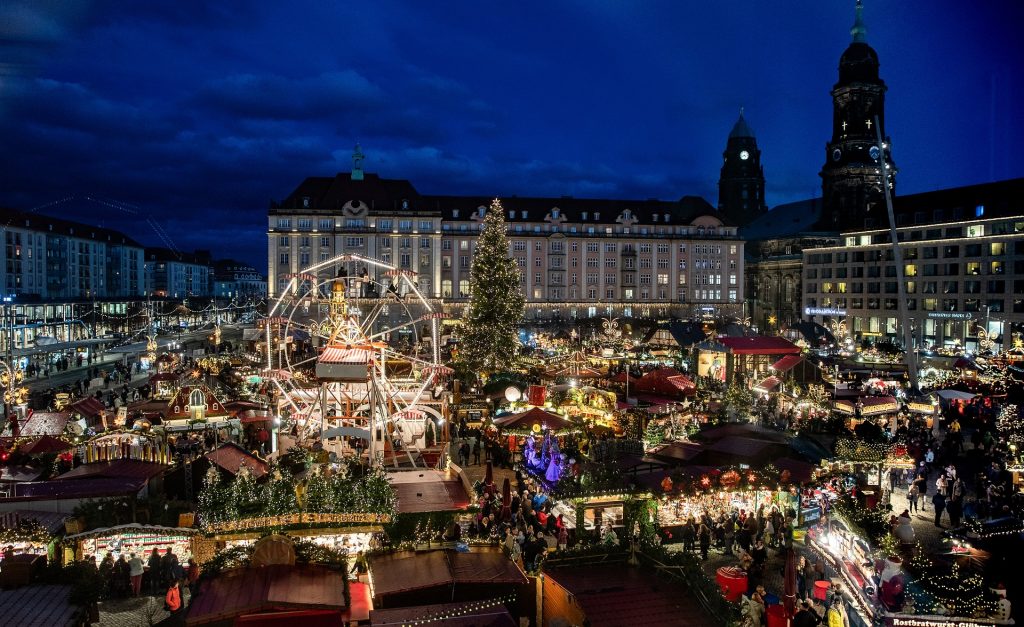
During the holiday season, integrators play a central role. Municipalities turn to specialists to handle their Christmas lighting. Indeed, this is a crucial time for the profession. It’s essential to respond quickly and effectively by analyzing current trends and challenges. People want interactive, spectacular, and show-stopping displays—all while keeping both financial and energy costs down. After all, energy prices are only going up.
That’s why today, integrators recommend low-power solutions, such as LED string lights, for example. These solutions are becoming increasingly sophisticated and allow for the creation of ever more complex lighting scenarios. It is in these situations that a specialist plays a crucial role. They are the ones who best understand the capabilities and potential of the solution they are proposing. Not to mention all the advance programming required to ensure the lighting show is a success. Integrators play a crucial role, especially at a time when technical advancements are sometimes too complex to master with just a manual. It’s up to them to guide their clients toward a successful performance.